
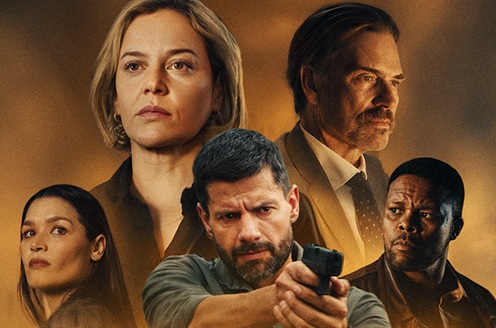

When international prestige television meets indigenous African noir, the temptation is often to dilute the local essence in pursuit of a generic Hollywood sheen. The creative team behind Invisible, the high-stakes screen adaptation of Deon Meyer’s acclaimed crime novel ‘Blood Safari’, took the opposite approach. Speaking candidly during a panel at the kykNET Silwerskermfees, the show’s key creators unpacked how they transformed a twenty-year-old literary thriller into a modern, eight-part television event that commands global attention while remaining fiercely South African.
The series starring Abbie Cornish, Tim Theron and Dougray Scott takes place in and around South Africa’s Kruger National Park and follows a dangerous manhunt after a mysterious vigilante begins killing local poachers. Adapting the novel required solving both temporal and narrative puzzles. Deon Meyer reflected on the reality that staging a 2006 period piece was financially and logistically prohibitive, demanding an update to reflect South Africa’s contemporary socio-political landscape. Teaming up with Canadian screenwriter William Josef Schneider, Meyer reworked crucial plot lines before handing the baton to co-director Amy Jephta in pre-production. Jephta worked alongside director Jozua Malherbe to refine the scripts, ensuring that Meyer’s signature momentum translated into viable television episodes without sacrificing the nuanced psychology of his characters.
Producer Cobus van der Berg highlighted the commercial balancing act of partnering with international heavyweight ITV Studios alongside MultiChoice and M-Net. While global distribution introduces overseas talent, higher budgets and immense logistical pressure, van der Berg maintained that a story loses its resonance if stripped of its origin. Leading man and producer Tim Theron, who portrays the stoic bodyguard Martin Dekker, echoed this sentiment, crediting visionary local investors with stepping in when complex multinational funding rounds hit unexpected roadblocks.
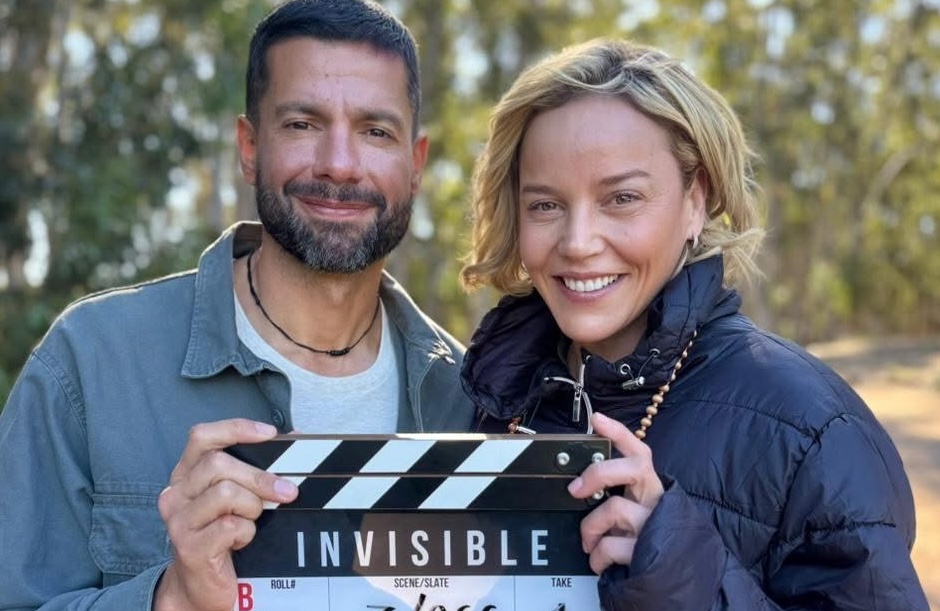
Visually, cinematographer Jorrie van der Walt established a deliberate aesthetic hierarchy to reflect the narrative’s tension. The production avoided frenetic, uncontrolled camerawork in favour of weighted, deliberate movements that let scenes breathe. Van der Walt framed the blazing heat and warm tones of the Hoedspruit bushveld against the cold, desaturated palette of Cape Town, ensuring that natural lighting and authentic skin tones anchored the performers in a vivid, high-key reality rather than murky cinematic shadow.
The ensemble cast mirrors this grounded ethos. Tumisho Masha imbues Colonel Jack Bapedi with quiet gravitas, framing him as a voice for ordinary South Africans navigating extraordinary crises. Opposite him, Kim Engelbrecht channels Jeanette’s vulnerability as a tactical strength within a male-dominated mercenary arena, drawing energy from a collaborative dynamic on set.
Invisible demonstrates that the future of global streaming does not lie in homogenisation. By trusting local landscapes, domestic infrastructure, and authentic voices, the production proves that the most specific regional stories often possess the widest international reach.