


When author Deon Meyer first envisaged the story that became ‘Blood Safari’ while cruising the Lowveld on a BMW motorcycle decades ago, he had no intention of thinking about adaptations. “Writing a novel is hard enough to try and get right,” Meyer noted during a panel discussion at the 12 Apostles Hotel. Yet, years later, that gritty tale has evolved into Invisible, a high-octane, eight-part television drama that sets a bold new benchmark for South African screen productions.
Bringing the series to fruition was an ambitious, high-stakes journey marked by budget hurdles, creative risks and international collaboration. Here is an inside look at how the creative team pulled off one of the country’s most anticipated screen adaptations.
Redefining the Source Material
Transitioning from page to screen meant acknowledging that the novel and the television series exist as two distinct entities. The team made key structural updates to bring the story into modern-day South Africa. In the original book, the political backdrop of Samora Machel’s death played a pivotal role, which would have required an expensive, period-accurate production. Updating the setting to contemporary South Africa allowed director Jozua Malherbe and co-writer Amy Jephta to root the narrative in current realities.
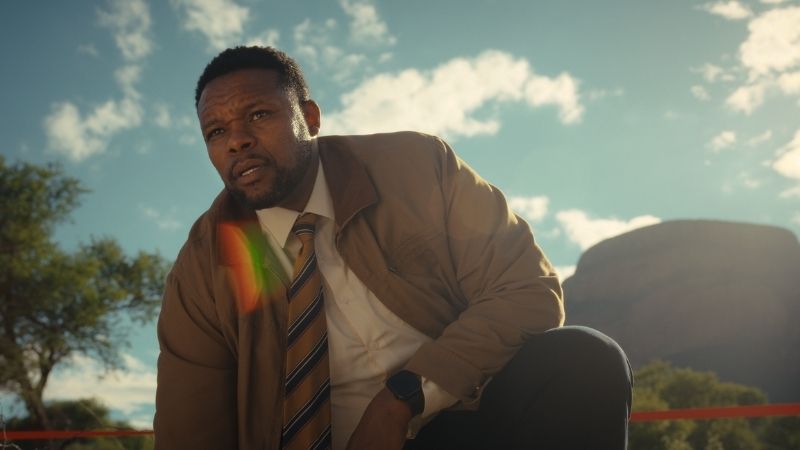
The adaptation also came with legal and naming quirks. The book’s original protagonist, Lemmer, had to be renamed Martin Dekker because the rights to the name “Lemmer” had previously been sold with Trackers. Furthermore, the series discarded the English book title ‘Blood Safari’ – which Meyer admitted he never liked, feeling it was “too on the nose” – in favour of Invisible. The title draws from the core ethos of Dekker’s character, mirroring international editions like the French Lemmer l’invisible and the German Weisse Schatten (White Shadow).
Surviving the Financial Tightrope
Producing a series of this magnitude was not without peril. With an original budget exceeding R100 million and an average crew of 100 people shooting across demanding wilderness locations, producer Cobus van den Berg revealed that the production faced sudden funding shortfalls mid-shoot.
When promised financing failed to materialise with cameras already rolling, executive producers and Dugga Boys investors Johann Holtzhausen and Piet Viljoen stepped in with equity funding to keep the cameras rolling.
The commitment went well beyond balance sheets. Viljoen found his own home commandeered to serve as the hideout for the villain. The set decoration crew promptly stripped out his homely furnishings, banished his scattered cushions, and replaced them with stark, minimalist décor suited to an antagonist.
A High-Calibre Local and International Ensemble
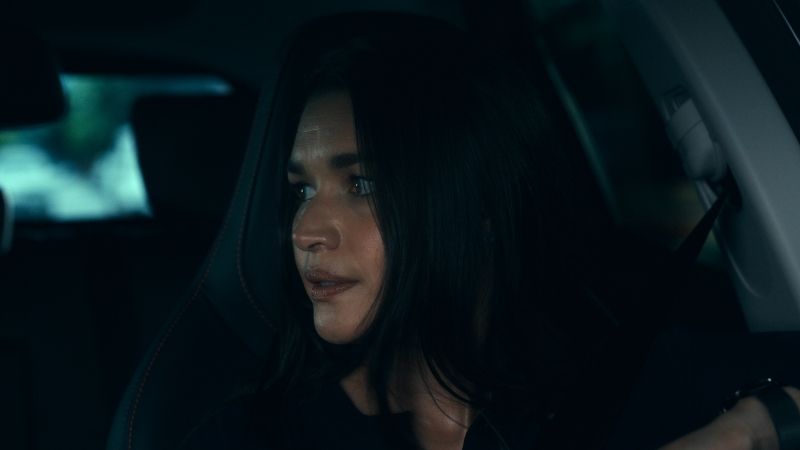
Invisible brings together a powerhouse ensemble:
Finding the Balance: Action with Heart
For co-director Amy Jephta and director Jozua Malherbe, the primary challenge was tonality. The team wanted to avoid both cartoonish action tropes and gratuitous violence that would alienate viewers. Every visceral moment – whether an intense fight sequence or a shocking confrontation – was designed to stem organically from character motivation.
Adapting the action also required tough choices. Jephta had to sacrifice massive set pieces, including an elaborate vehicle-and-train chase sequence that would have consumed half the shooting schedule. In its place, the team crafted an unbroken, 20-minute continuous action sequence spanning episodes three and four that delivers spectacle while keeping the story grounded.
Episode six serves as a unique standalone bottle episode co-directed by Jephta and Malherbe, flashing back to 1994 to uncover the origin story and conspiracy driving the entire mystery.
A Global Thriller with South African Roots
Rather than mimicking international action formulas, Invisible embraces its local identity to tell an expansive, hopeful story. As Tumisho Masha put it, the series captures the euphoric pride South Africans feel during world-class sporting victories, packaging that emotion into a premium television box set.
While season one wraps up its core mystery in a self-contained arc, the creative team confirmed that the foundation has been laid for future seasons. With its seamless blend of complex characters, grounded action and top-tier craftsmanship, Invisible shows what is possible when South African storytelling aims straight for the global stage.